People are fascinated by the brain and the world is in a frenzy about artificial intelligence. And in the background, there are rumors of a better and cheaper way to do AI that is more inspired by the brain than today’s methods, but this neuromorphic computing remains a mystery to most people. This site is about the intersection of these three fields, how they are coming together nicely, and what we are learning about how they do not fit. I’m not an AI fanboy,
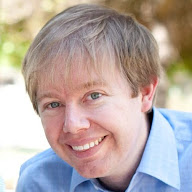
Who am I? I am a computational & theoretical neuroscientist who left the mainstream neuroscience research field fifteen years ago to look for a better way. Society needs us to cure the brain’s diseases, needs us to help build smarter computers, and need us to help us all understand how everyone learns and thinks; but we have failed to do our part. So I grew frustrated with the avenues open in neuroscience research to address these challenges head-on, and I journeyed to the land of rigorous mathematics and parallel computing to learn new ways to understanding the brain’s computation. I have found that by going further from the brain, I have grown closer to it.
Computing needs the brain, and the brain needs computing.
The goal here is to bring these fields closer together.
About me
Between 2002 and 20011, I was at the Salk Institute for Biological Studies, working in Rusty Gage’s laboratory. At first I did bioinformatics work (though it wasn’t called that then), and then I got my PhD in Computational Neuroscience from UC San Diego across the street. In my time there I modeled adult neurogenesis and read almost every paper about dentate gyrus neuroanatomy.
I currently am a Distingushed Member of the Technical Staff at Sandia National Laboratories, working in the Center for Computing Research. I have been at Sandia since 2011, and while I came here with visions of building the world’s largest neural simulations (and indeed did several very large ones), I have transitioned to neuromorphic computing.
I am on the organizing committee of the NICE Conference, which I have been part of since the first one in 2013. If you are interested in neuromorphic computing, you should attend NICE.
I was the lead of the team that won the Misha Mahowald Prize for Neuromorphic Engineering in 2023. We won for demonstrating a neuromorphic advantage for Monte Carlo random walk computations.
Requisite disclaimer: This site is not about my work at Sandia, rather it describes my perspectives about the broader state of the neuroscience, neuromorphic, and NeuroAI fields today. I will talk about our groups’ papers and results, but only they have been formally released (which we do regularly). The thoughts and opinions stated here are mine, and mine alone, and do not necessarily represent the views of Sandia or anyone else who I work with.